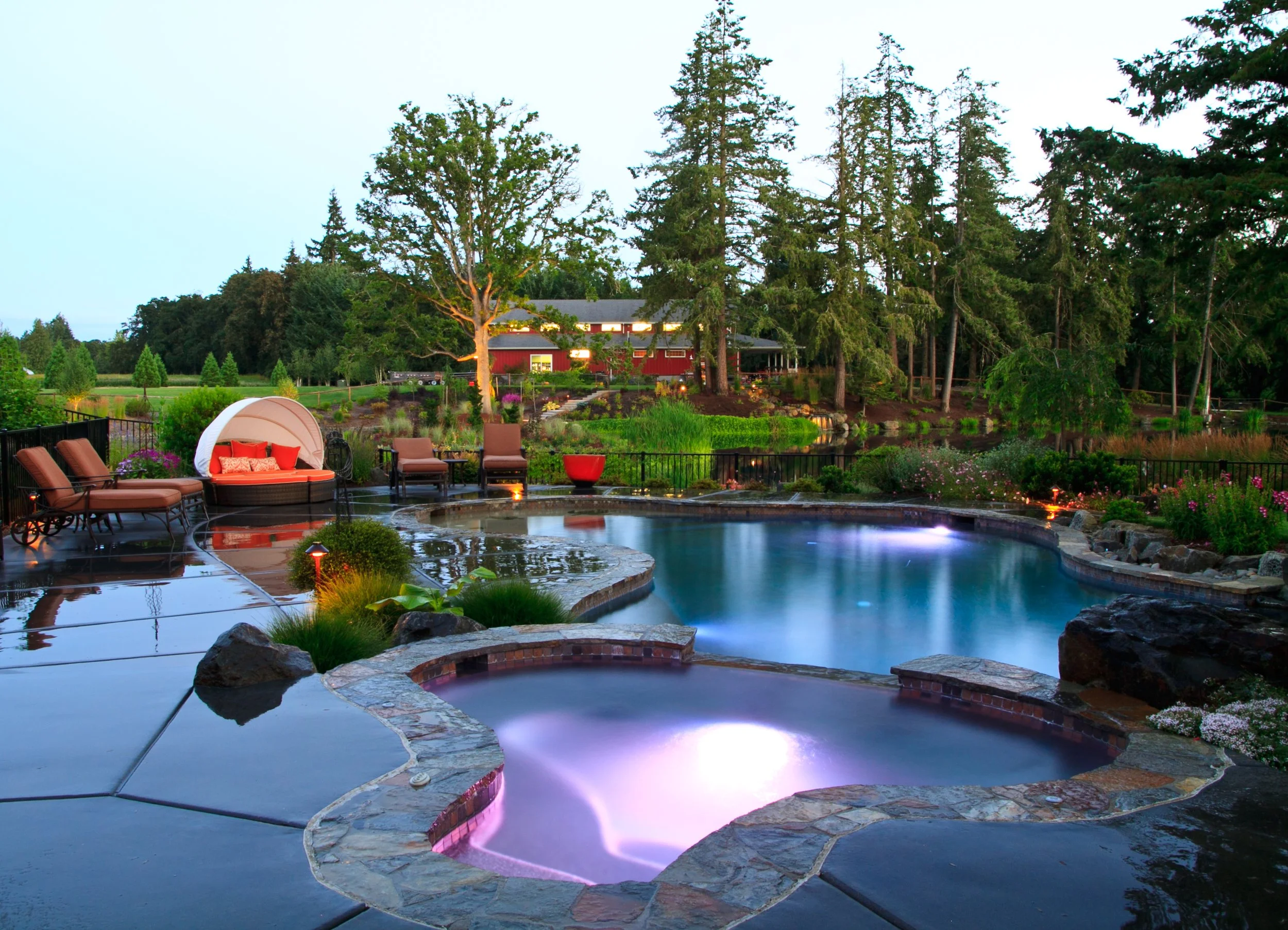
A backyard pool designer in Wilsonville, OR spends the first conversations on access, elevation and where the equipment will sit, because those three answers constrain every other decision. Design is where a pool becomes sensible or expensive, and it happens long before a machine arrives.
Anderson Poolworks began as a family pool plastering business in 1997 and now designs, builds, renovates and maintains pools under one roof.
We have multiple PHTA Certified Builder Professionals on staff, which is rare for a pool company, so a drawing that leaves our office is one our own team has to deliver in the ground.
Why Does Equipment Access Come Up First in Pool Design?
Equipment access comes up first because a gunite pool needs machinery in the yard and spoil hauled out of it.
Side-yard width, gate positions, overhead wires and the neighbor’s fence line decide what can physically reach the dig, and they are measured before anything is drawn.
On a constrained lot that answer reshapes the design rather than the price alone. It can move the pool several feet, change its shape, or put the equipment pad somewhere other than the obvious corner.
How Does Yard Elevation Change a Pool Design?
Yard elevation decides how the pool shell meets the slope, cut into it or lifted out of it, and each option carries different retaining and deck consequences.
Lots around Wilsonville rarely sit perfectly flat, so this question comes up on most properties.
Elevation also sets how the pool reads from inside the house. A water surface level with the patio looks very different from one you step down to, and the retaining, steps and drainage that go with each choice are settled on paper rather than discovered on site.
What Should a Pool Design Include Beyond the Shape?
A usable pool design names the finish, the coping, the deck material and the depth profile, and it shows where the skimmers, returns and lights land. The outline is the easy part.
It also places the equipment pad, its screening and its run of plumbing, which is the detail homeowners most often inherit as a surprise.
Treating those as design decisions rather than details left to the install crew is what keeps the finished yard looking intentional.
Related: Pool & Spa Contractor in Wilsonville, OR: Planning Two Vessels as One System
Where Do Swim Jets and Spas Fit Into a Pool Design?
Swim jets and spas belong in the first drawing, because each one changes the shell and the plumbing.
A pool fitted with swim jets serves a different purpose from a pool built for entertaining, and the two want different depths and lengths. Deciding that early avoids a shell that compromises on both.
An attached spa raises the same question. A raised spillover spa changes the plumbing, the heater sizing and the elevation of the surrounding deck, so it belongs in the drawing rather than in a later conversation about adding one.
Why Start a Pool Design in Fall?
Starting in fall lines the build up for a summer swim date. Construction typically begins three to five weeks after building permit approval, and a typical residential pool takes three to four months to complete once work starts. Counting backward from summer puts the design conversation in fall rather than March.
The Pacific Northwest also offers a long shoulder season rather than a hard freeze, so design and permitting work carries on through the wet months while the yard is doing nothing anyway.
Talk to a Backyard Pool Designer Before Next Summer
The questions above are answered on paper, at a kitchen table, with a site visit behind them.
Anderson Poolworks designs and builds pools for homes across Wilsonville, Lake Oswego, West Linn and the surrounding Oregon and Washington communities.
Schedule your pool design consultation with Anderson Poolworks.
In Summary
How long does the pool design stage take before construction starts?
The design stage runs as long as permitting takes, since the local jurisdiction sets the pace more than the drawing does. Anderson Poolworks typically starts construction three to five weeks after the building permit is approved, so starting design in fall usually means approvals are in hand before the spring calendar fills.
Can a pool be designed around an existing patio in Wilsonville?
A pool can usually be designed around an existing patio, with the patio’s elevation becoming a fixed point the design works to. Measuring what is there first matters, because matching an established grade is easier than correcting it later.
Does a sloped yard rule out a pool?
A sloped yard usually changes the retaining and deck approach rather than whether a pool is possible. Slope sometimes produces a better result than a flat lot would, because the grade change creates room for steps, walls and a raised spa.
Related: Swimming Pool Contractor in Wilsonville, OR: What Separates a Good Proposal from a Risky One